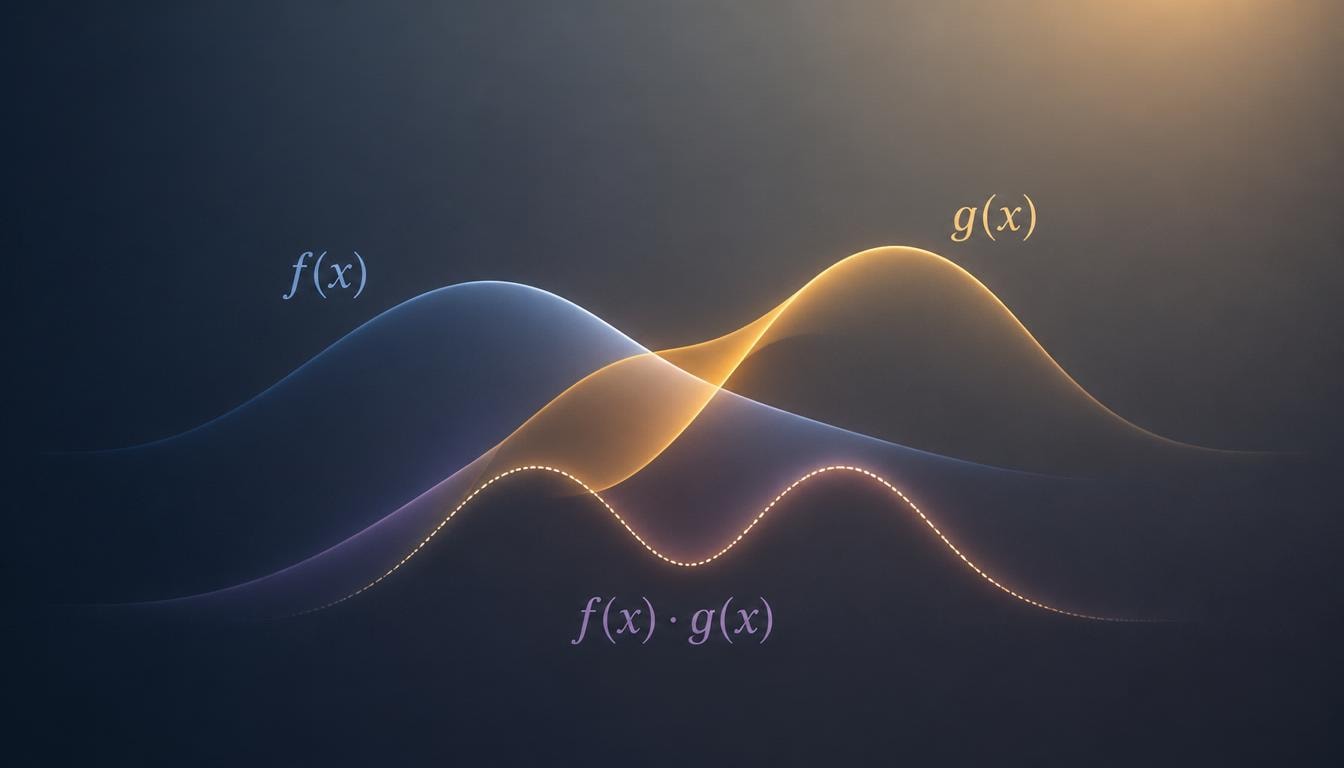
When dealing with simple functions, such as polynomial, exponential, or trigonometric functions, differentiation is relatively straightforward. However, mathematical models of real-world phenomena often involve complex functions that are multiplied together. To differentiate these combinations, we rely on a fundamental tool known as the Product Rule.
The Product Rule is a formal algebraic formula used in calculus to find the derivative of a function that is the product of two or more other functions. In this comprehensive guide, we will explore the mathematical definition of the Product Rule, understand why simpler intuitive approaches fail, examine a rigorous algebraic proof, visualize its geometric meaning, walk through practical examples, and look at how it applies to real-world scientific problems.
The Mathematical Statement of the Product Rule
Before diving into the mechanics, let us state the rule clearly. If we have two functions, let's call them f(x) and g(x), both of which are differentiable over a given interval, their product h(x) = f(x) · g(x) is also differentiable. The derivative of this product is not simply the product of their individual derivatives. Instead, it is given by the following formula:
The Product Rule (Lagrange's Notation):
(f · g)' = f' · g + f · g'
Or written more explicitly:
d/dx [f(x)g(x)] = f'(x)g(x) + f(x)g'(x)
In words, the derivative of a product of two functions is equal to the derivative of the first function multiplied by the second function, plus the first function multiplied by the derivative of the second function.
Using Leibniz's notation, which is highly favored in physics and engineering, if we let u = u(x) and v = v(x), the rule is expressed as:
The Product Rule (Leibniz's Notation):
d/dx [u · v] = u · (dv/dx) + v · (du/dx)
Why the Naive Approach Fails: A Common Misconception
When students first encounter the product of two functions, a very common temptation is to assume that differentiation distributes over multiplication just as it does over addition. That is, they assume:
d/dx [f(x)g(x)] = f'(x) · g'(x) (This is mathematically INCORRECT!)
To understand why this is false, let us look at a simple counterexample. Let f(x) = x and g(x) = x. Their product is:
h(x) = f(x) · g(x) = x · x = x2
Using the basic Power Rule, we know that the derivative of h(x) = x2 is:
h'(x) = 2x
Now let's see what happens if we mistakenly apply the naive, incorrect approach. The individual derivatives of our functions are:
f'(x) = d/dx [x] = 1
g'(x) = d/dx [x] = 1
If we simply multiplied these derivatives together, we would get:
f'(x) · g'(x) = 1 · 1 = 1
Clearly, 1 is not equal to 2x. This simple demonstration proves that we cannot merely multiply the individual derivatives of two functions to find the derivative of their product. We must use the correct Product Rule.
Geometric Intuition of the Product Rule
To build an intuitive understanding of why the Product Rule works the way it does, we can look at a geometric representation using the area of a dynamic rectangle.
Imagine a rectangle whose width is given by the function u(x) and whose height is given by the function v(x). The area of this rectangle, A(x), is the product of its width and height:
A(x) = u(x) · v(x)
Suppose we increase the independent variable x by a small amount, Δx. This change causes the width to increase by a small amount, Δu, and the height to increase by a small amount, Δv. The new dimensions of the rectangle are (u + Δu) and (v + Δv).
The new area of the expanded rectangle is:
A + ΔA = (u + Δu)(v + Δv)
A + ΔA = u·v + u·Δv + v·Δu + Δu·Δv
Since the original area is A = u·v, we can subtract A from both sides to find the change in area, ΔA:
ΔA = u·Δv + v·Δu + Δu·Δv
To find the rate of change of the area with respect to x, we divide the entire equation by Δx:
ΔA / Δx = u · (Δv / Δx) + v · (Δu / Δx) + Δu · (Δv / Δx)
Now, we take the limit as Δx approaches 0 to find the instantaneous rate of change (the derivative):
As Δx → 0, the terms ΔA/Δx, Δu/Δx, and Δv/Δx become the derivatives dA/dx, du/dx, and dv/dx, respectively. Crucially, the term Δu on its own approaches 0. Therefore, the term Δu · (Δv / Δx) vanishes completely because it becomes 0 · (dv/dx) = 0.
This leaves us with the exact formula for the Product Rule:
dA/dx = u · (dv/dx) + v · (du/dx)
Rigorous Proof Using the Limit Definition
For students looking for a rigorous mathematical foundation, we can prove the Product Rule directly using the formal limit definition of a derivative. The limit definition of the derivative of a function h(x) is:
h'(x) = lim[h → 0] [h(x + h) - h(x)] / h
Let h(x) = f(x)g(x). Substituting this into our limit definition gives:
h'(x) = lim[h → 0] [f(x + h)g(x + h) - f(x)g(x)] / h
At this stage, we encounter an algebraic roadblock: there is no obvious way to separate f(x) and g(x). To resolve this, we employ a classic mathematical technique of adding and subtracting the same term in the numerator. This does not change the value of the expression because we are essentially adding zero. The term we add and subtract is f(x + h)g(x):
h'(x) = lim[h → 0] [f(x + h)g(x + h) - f(x + h)g(x) + f(x + h)g(x) - f(x)g(x)] / h
Now, we can group the numerator into two distinct parts and factor out common terms:
h'(x) = lim[h → 0] [ f(x + h) · (g(x + h) - g(x)) + g(x) · (f(x + h) - f(x)) ] / h
Using the limit laws, we can split this single limit into the sum of two separate limits:
h'(x) = lim[h → 0] [ f(x + h) · (g(x + h) - g(x)) / h ] + lim[h → 0] [ g(x) · (f(x + h) - f(x)) / h ]
Because the limit of a product is the product of the limits, we can evaluate each component individually:
As h → 0, f(x + h) simply becomes f(x) (assuming f is continuous, which is guaranteed because it is differentiable).
The term lim[h → 0] [g(x + h) - g(x)] / h is, by definition, the derivative of g(x), which is written as g'(x).
The term g(x) does not depend on h, so it remains constant relative to the limit, yielding g(x).
The term lim[h → 0] [f(x + h) - f(x)] / h is, by definition, the derivative of f(x), which is written as f'(x).
Putting all of these evaluated limits back together, we get:
h'(x) = f(x)g'(x) + g(x)f'(x)
Rearranging the terms, we arrive at our familiar Product Rule formula:
h'(x) = f'(x)g(x) + f(x)g'(x)
Step-by-Step Practical Examples
To master the Product Rule, it is essential to work through concrete mathematical examples. Let's look at a few common scenarios.
Example 1: Differentiating an Algebraic and Trigonometric Combination
Find the derivative of the function: y = x3 · sin(x)
Step 1: Identify the two functions making up the product.
Let u(x) = x3
Let v(x) = sin(x)
Step 2: Calculate the derivatives of the individual functions.
Using the Power Rule, u'(x) = 3x2
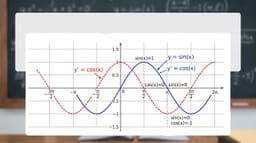
Using standard trigonometric derivatives, v'(x) = cos(x)
Step 3: Apply the Product Rule formula: y' = u'v + uv'
Substitute the functions and their derivatives into the formula:
y' = (3x2)(sin(x)) + (x3)(cos(x))
Final Answer: y' = 3x2sin(x) + x3cos(x)
Example 2: Differentiating with Exponential Functions
Find the derivative of the function: f(x) = ex · ln(x)
Step 1: Identify the individual functions.
Let u = ex
Let v = ln(x)
Step 2: Differentiate each function individually.
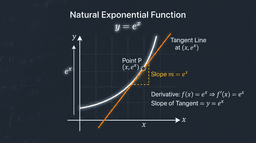
The derivative of ex is itself: u' = ex
The derivative of ln(x) is: v' = 1/x
Step 3: Apply the Product Rule formula: f'(x) = u'v + uv'
Substitute the values:
f'(x) = (ex)(ln(x)) + (ex)(1/x)
We can simplify this answer by factoring out the common term, ex:
Final Answer: f'(x) = ex [ ln(x) + 1/x ]
Extending the Product Rule to Three or More Functions
What happens if we need to differentiate the product of three functions? Suppose we have y = f(x)g(x)h(x). We can extend the product rule to accommodate any number of functions. By grouping two of the functions together as a single entity, we can apply the rule iteratively to find the generalized pattern:
The Triple Product Rule:
d/dx [f(x)g(x)h(x)] = f'(x)g(x)h(x) + f(x)g'(x)h(x) + f(x)g(x)h'(x)
Notice the highly symmetrical pattern: we differentiate only one function at a time in each term while leaving the other functions untouched, and then we add all the resulting terms together. This pattern holds true for products of four, five, or any arbitrary number of functions!
Real-World Applications in Science and Physics
The Product Rule is not just an abstract mathematical exercise; it is heavily utilized in physics, chemistry, and economics to model dynamic systems where multiple changing variables interact.
1. Classical Mechanics: Variable Mass Systems (Rocket Propulsion)
In introductory physics, Newton's Second Law is often written in its simplified form, F = ma (Force equals mass times acceleration). However, the true definition of force is the rate of change of momentum (p) with respect to time (t):
F = dp/dt
Momentum is defined as the product of mass and velocity: p = m · v. If both the mass of an object and its velocity are changing over time (for example, a rocket burning through its fuel and losing mass as it accelerates), we must apply the Product Rule to find the force:
F = d(mv)/dt = m(dv/dt) + v(dm/dt)
Here, m(dv/dt) represents mass times acceleration, while v(dm/dt) accounts for the force generated by the changing mass of the rocket. This equation is absolutely vital for aerospace engineers calculating rocket trajectories.
2. Electromagnetism: Electrical Power
The electrical power (P) consumed by a circuit component is the product of the current (I) flowing through it and the voltage (V) across it:
P = I · V
In alternating current (AC) circuits, both current and voltage fluctuate continuously over time. If we want to find the rate of change of power consumption at any given instant, we must differentiate the power formula with respect to time using the Product Rule:
dP/dt = I · (dV/dt) + V · (dI/dt)
This allows electrical engineers to analyze power surges and ensure the stability of electrical grids.
Key Takeaways
The Product Rule is essential because the derivative of a product is not simply the product of the individual derivatives.
The standard formula is: d/dx [f(x)g(x)] = f'(x)g(x) + f(x)g'(x).
The rule can be proved rigorously using the limit definition of a derivative by adding and subtracting the term f(x + h)g(x) in the numerator.
Geometrically, the Product Rule represents how the area of a rectangle changes when both its width and height are altered simultaneously.
The rule can be extended to three or more functions by differentiating one function at a time in a series of added terms.
Real-world applications of the rule span across various scientific disciplines, including rocket propulsion and electrical engineering, where multiple interacting variables change simultaneously.