Whether we are tracking the trajectory of a rocket, the growth of a bacterial population, or the fluctuations of a financial market, we rely on functions to describe how one quantity changes in relation to another. One of the most fundamental questions we can ask about any dynamic process is: Is it going up, or is it going down?
In mathematical terms, this behavior is analyzed through the concepts of increasing and decreasing functions. Understanding whether a function is increasing or decreasing allows us to predict future trends, identify maximum and minimum values, and understand the overall behavior of a system. This comprehensive guide will explore these concepts from the ground up, combining intuitive graphical interpretations, rigorous algebraic definitions, and powerful calculus-based tools.
1. The Intuitive Idea: Reading Graphs from Left to Right
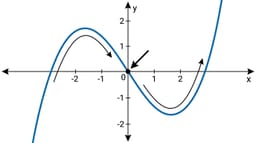
Before diving into mathematical equations, let us develop an intuitive visual understanding. When we look at the graph of a function on a standard Cartesian coordinate system, we always read it from left to right—which corresponds to the direction of increasing x-values.
Increasing Behavior: If you imagine walking along the curve from left to right and you find yourself climbing uphill, the function is increasing. As the input x increases, the output y (or f(x)) also increases.
Decreasing Behavior: If you are walking along the curve from left to right and you are going downhill, the function is decreasing. As the input x increases, the output y decreases.
Constant Behavior: If you are walking on flat ground, the function is constant. The output y remains unchanged as x increases.
2. Rigorous Algebraic Definitions
To analyze functions precisely without relying solely on visual estimation, mathematicians use formal algebraic definitions. These definitions apply to specific intervals within a function's domain.
Strictly Increasing Functions
A function f is said to be strictly increasing on an interval I if, for any two numbers x1 and x2 in that interval:
If x1 < x2, then f(x1) < f(x2).
This means that a larger input always guarantees a strictly larger output. The graph never flattens out; it only goes upward.
Strictly Decreasing Functions
Conversely, a function f is said to be strictly decreasing on an interval I if, for any two numbers x1 and x2 in that interval:
If x1 < x2, then f(x1) > f(x2).
This means that as the input increases, the output strictly decreases. The graph never flattens; it only goes downward.
Non-Decreasing and Non-Increasing Functions
Sometimes, a function may flatten out temporarily but never go in the opposite direction. We define these as follows:
Non-decreasing (or weakly increasing): If x1 < x2 implies f(x1) ≤ f(x2). This allows for intervals where the function remains constant.
Non-increasing (or weakly decreasing): If x1 < x2 implies f(x1) ≥ f(x2). This allows for flat horizontal sections where the output does not change.
3. The Power of Calculus: The First Derivative Test
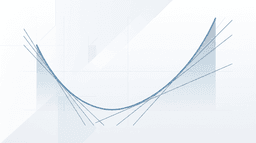
While the algebraic definition is foundational, checking every pair of points in an interval is practically impossible for complex functions. This is where calculus provides an elegant solution. The derivative of a function, denoted as f'(x), represents the instantaneous rate of change of the function, or the slope of the tangent line at any given point x.
By examining the sign of the first derivative, we can instantly determine whether a differentiable function is increasing or decreasing on an interval:
If f'(x) > 0 for all x in an interval I, then the tangent lines to the graph have positive slopes. This means the function f is strictly increasing on that interval.
If f'(x) < 0 for all x in an interval I, then the tangent lines to the graph have negative slopes. This means the function f is strictly decreasing on that interval.
If f'(x) = 0 for all x in an interval I, the tangent lines are horizontal. The function f is constant on that interval.
4. Critical Points and Sign Charts
To find the exact intervals where a function increases or decreases, we must find the boundaries where the function transitions between these behaviors. These boundary points are called critical points.
A critical point of a function f is a value c in the domain of f where either:
The first derivative is zero: f'(c) = 0.
The first derivative is undefined: f'(c) does not exist.
Once we identify these critical points, we partition the domain of the function into sub-intervals and test the sign of the derivative in each sub-interval using a sign chart.
5. Step-by-Step Practical Example
Let us apply this methodology to a specific cubic function to find its intervals of increase and decrease:
Function: f(x) = x3 - 3x2 - 9x + 5
Step 1: Find the Derivative
Using the power rule of differentiation, we find the first derivative of the function:
f'(x) = 3x2 - 6x - 9
Step 2: Find the Critical Points
Set the derivative equal to zero to find where the slope of the tangent line is horizontal:
3x2 - 6x - 9 = 0
We can simplify this equation by dividing all terms by 3:
x2 - 2x - 3 = 0
Factoring the quadratic equation gives:
(x - 3)(x + 1) = 0
Thus, our critical points are x = -1 and x = 3. Since the derivative is a polynomial, it is defined everywhere, so there are no points where the derivative does not exist.
Step 3: Set Up the Intervals
The critical points partition the real number line into three distinct open intervals:
(-∞, -1)
(-1, 3)
(3, ∞)
Step 4: Perform the Sign Test
We choose a test value from each interval and plug it into the derivative f'(x) = 3(x - 3)(x + 1) to determine its sign:
For the interval (-∞, -1): Let's choose x = -2.
f'(-2) = 3(-2 - 3)(-2 + 1) = 3(-5)(-1) = 15 (which is positive).
Since f'(x) > 0, the function is increasing on (-∞, -1).For the interval (-1, 3): Let's choose x = 0.
f'(0) = 3(0 - 3)(0 + 1) = 3(-3)(1) = -9 (which is negative).
Since f'(x) < 0, the function is decreasing on (-1, 3).For the interval (3, ∞): Let's choose x = 4.
f'(4) = 3(4 - 3)(4 + 1) = 3(1)(5) = 15 (which is positive).
Since f'(x) > 0, the function is increasing on (3, ∞).
Step 5: State the Final Intervals
Combining our results, we conclude that the function f(x) = x3 - 3x2 - 9x + 5 is:
Strictly increasing on the intervals (-∞, -1] and [3, ∞).
Strictly decreasing on the interval [-1, 3].
Note: In intermediate and advanced mathematics, intervals of increase and decrease are often written as closed intervals because the function remains continuous at the boundary endpoints.
6. Scientific and Real-World Applications
Physics: Motion and Kinematics
In physics, the position of an object over time is modeled as a function s(t). The derivative of position is velocity, v(t) = s'(t).
If the position function s(t) is increasing, its derivative (velocity) is positive, meaning the object is moving forward.
If the position function s(t) is decreasing, its derivative is negative, meaning the object is moving backward.
Biology: Population Dynamics
Biologists model population growth using functions. In an environment with limited resources, a population often follows a logistic growth curve. Initially, the population function is strictly increasing at an accelerating rate. As resources become scarce, the function continues to increase but at a decreasing rate, eventually leveling off near the environment's carrying capacity.
Chemistry: Radioactive Decay
In nuclear chemistry, the mass of a radioactive sample over time is modeled by an exponential decay function, such as N(t) = N0e-kt. Because the rate of decay is proportional to the remaining mass, the derivative is always negative. Thus, the mass function is a strictly decreasing function over all positive time intervals, asymptotically approaching zero but never reaching it.
7. Summary and Key Takeaways
Mastering the concept of increasing and decreasing functions is essential for anyone studying algebra, calculus, or applied sciences. Here are the core points to remember:
Visual Meaning: Reading a graph from left to right, increasing functions go upward, and decreasing functions go downward.
Algebraic Rule: For an increasing function, if x1 < x2, then f(x1) < f(x2). For a decreasing function, if x1 < x2, then f(x1) > f(x2).
Calculus Connection: The sign of the first derivative determines the behavior. If f'(x) > 0, the function is increasing. If f'(x) < 0, the function is decreasing.
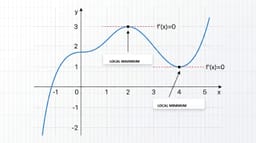
Critical Points: Where f'(x) = 0 or is undefined, the function can transition from increasing to decreasing, or vice versa. These points are essential for finding local extrema (peaks and valleys).