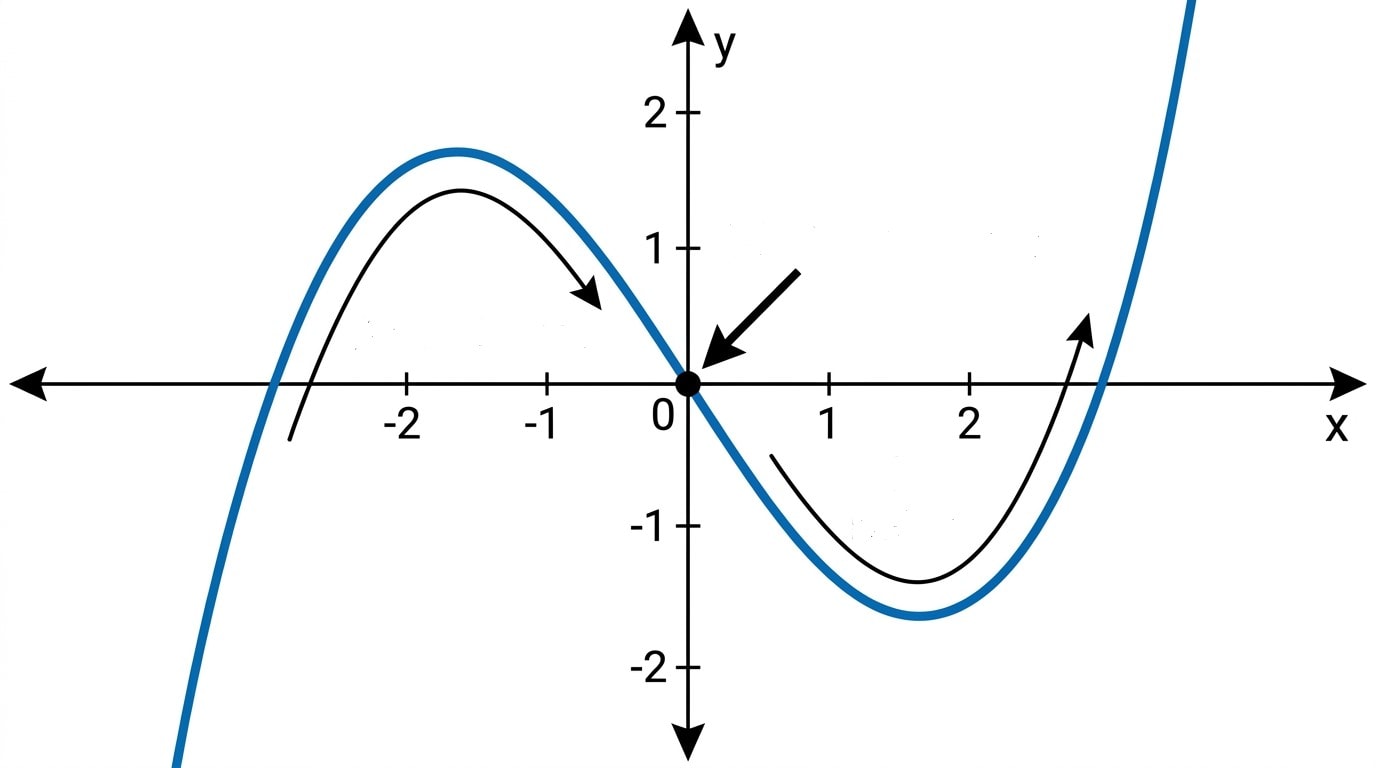
An inflection point is a fundamental concept in calculus and mathematical analysis. It marks the boundary where the qualitative behavior of a curve changes, transitioning from bending upward to bending downward, or vice versa. Understanding inflection points allows scientists, engineers, and economists to identify critical shifts in trends, such as the moment a disease outbreak begins to slow down, or when a marketing campaign reaches its peak efficiency.
Understanding Concavity: The Foundation of Inflection Points
To fully grasp what an inflection point is, we must first understand the concept of concavity. Concavity describes the direction in which a curve bends. There are two primary types of concavity:
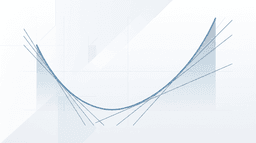
Concave Up (Convex): A curve is concave up if it bends upward, resembling a cup or a smile. Mathematically, if you draw a tangent line to any point on a concave-up section of a curve, the curve will lie entirely above that tangent line. The slope of the curve is increasing.
Concave Down (Concave): A curve is concave down if it bends downward, resembling an umbrella or a frown. If you draw a tangent line to a concave-down section, the curve will lie entirely below that tangent line. The slope of the curve is decreasing.
The Definition of an Inflection Point: An inflection point is a point on a continuous curve at which the concavity changes from concave up to concave down, or from concave down to concave up.
The Calculus of Inflection Points
Calculus provides us with the precise tools needed to locate and analyze these points using derivatives. Let us break down the mathematical relationship step-by-step:
1. The First Derivative and Slope
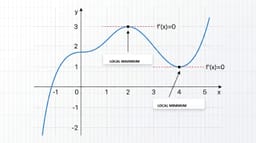
The first derivative of a function, denoted as f'(x), represents the slope of the tangent line at any given point. It tells us whether the function is increasing or decreasing.
2. The Second Derivative and Concavity
The second derivative, denoted as f''(x), is the derivative of the first derivative. It measures the rate of change of the slope. This is where concavity is mathematically defined:
If f''(x) > 0 on an interval, the slope is increasing, and the graph is concave up.
If f''(x) < 0 on an interval, the slope is decreasing, and the graph is concave down.
3. Locating Candidates for Inflection Points
Because an inflection point is where concavity changes, it must occur at a point where the second derivative transitions from positive to negative, or from negative to positive. Therefore, potential inflection points (often called critical values of the second derivative) occur where:
f''(x) = 0, or
f''(x) is undefined.
The Crucial Test: Confirming an Inflection Point
A common misconception is that any point where f''(x) = 0 is automatically an inflection point. This is not true. For a point to be a true inflection point, the second derivative must actually change sign as it passes through that point.
Consider the function f(x) = x4. Let's find its derivatives:
First derivative: f'(x) = 4x3
Second derivative: f''(x) = 12x2
If we set the second derivative to zero, 12x2 = 0, we get x = 0. However, let's look at the sign of f''(x) around x = 0:
For x < 0 (e.g., x = -1), f''(-1) = 12(-1)2 = 12 > 0 (Concave Up).
For x > 0 (e.g., x = 1), f''(1) = 12(1)2 = 12 > 0 (Concave Up).
Since the concavity does not change (it remains concave up on both sides of zero), the point (0,0) is NOT an inflection point for the function f(x) = x4. This demonstrates why the sign-change test is absolutely necessary.
Physical and Scientific Applications
1. Population Dynamics and Logistic Growth
In biology and ecology, population growth is rarely unchecked. Instead of growing exponentially forever, populations typically follow a logistic growth curve. This curve is S-shaped and is modeled by functions that account for carrying capacity—the maximum population size that an environment can sustain.
At the beginning of the curve, resources are abundant, and the population grows at an accelerating rate (concave up). However, as resources become scarce, the growth rate begins to slow down, eventually leveling off near the carrying capacity (concave down).
The inflection point of this logistic curve represents the exact moment of maximum growth rate. It is the transition point where the population stops accelerating and begins to decelerate. Identifying this point is vital for wildlife management, agriculture, and epidemiology to predict when an epidemic or population boom will peak.
2. Thermodynamics and Phase Transitions
In physics and chemistry, inflection points appear on pressure-volume (PV) isotherms of real gases. When plotting pressure against volume for a gas at its critical temperature, the resulting curve exhibits an inflection point known as the critical point. At this precise point, the liquid and gas phases of a substance become indistinguishable, marking a major thermodynamic phase transition.
3. Economics: Diminishing Marginal Returns
In economics, the law of diminishing marginal returns is visualized using a production function. Initially, adding more inputs (like workers or machinery) leads to rapidly increasing output (concave up). However, there comes a point where adding more inputs yields smaller and smaller increases in output (concave down). The inflection point on the production curve represents the point of diminishing returns—the optimal level of input before efficiency begins to decline.
How to Find Inflection Points: A Step-by-Step Guide
To locate the inflection points of any differentiable function, follow this systematic procedure:
Find the first derivative: Calculate f'(x).
Find the second derivative: Calculate f''(x).
Identify candidate points: Set f''(x) = 0 and solve for x. Also, identify any values of x where f''(x) is undefined.
Set up intervals: Use the candidate values to divide the domain of the function into distinct intervals.
Perform the Sign Test: Choose a test value from each interval and substitute it into the second derivative f''(x) to determine if it is positive or negative.
Confirm concavity changes: If the sign of f''(x) changes from positive to negative (or vice versa) across a candidate point, that point is a verified inflection point.
Find the y-coordinate: Substitute the confirmed x value back into the original function f(x) to find the corresponding y coordinate.
Key Takeaways
An inflection point is where a curve transitions between concave up and concave down.
At an inflection point, the second derivative f''(x) is either zero or undefined, and it must change signs.
Graphically, the tangent line cuts directly through the curve at the inflection point.
In real-world systems, inflection points represent moments of maximum change, such as the peak rate of a chemical reaction, peak disease transmission, or the point of diminishing economic returns.