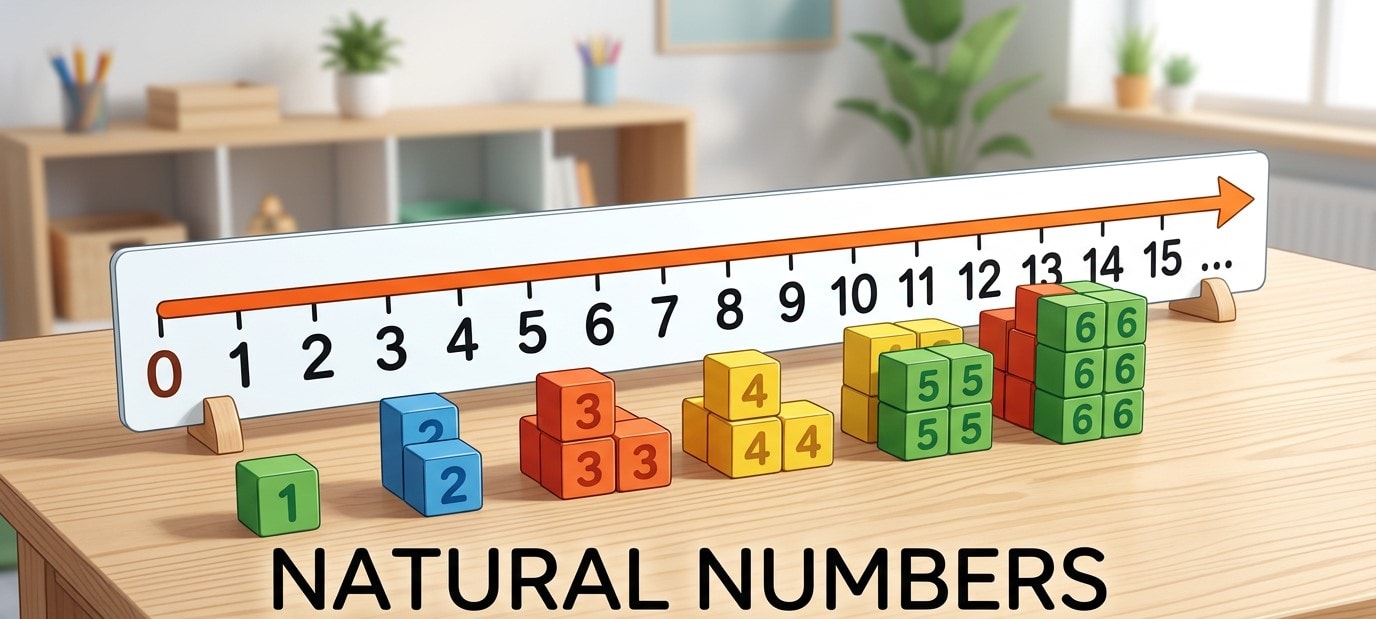
From the moment we first learn to count our fingers, point to toys, or track the passing of days, we are interacting with the most fundamental building blocks of mathematics: natural numbers. These are the numbers that feel entirely intuitive, arising organically from our need to quantify the physical world around us. But what exactly is a natural number when stripped down to its mathematical, historical, and scientific core?
While they seem simple on the surface, natural numbers possess a rich logical structure that forms the foundation of all modern mathematics. In this comprehensive guide, we will explore the origins of natural numbers, their formal mathematical definitions, their properties, and how they bridge the gap to more complex number systems like integers and rational numbers.
1. The Intuitive and Historical Origins of Counting
Before mathematicians formulated rigorous axioms, natural numbers existed as a practical tool for survival. Early humans needed to track livestock, measure seasons, and trade goods. Physical objects like pebbles, notches carved into bones (such as the famous Ishango bone found in Africa), and tally marks served as the first concrete representations of numbers.
This physical origin explains why we call them "natural"—they correspond directly to discrete, observable objects in nature. You can have 3 apples, 10 sheep, or 150 trees. In these contexts, numbers represent quantity and order. This brings us to the two primary ways we use natural numbers:
Cardinal Numbers: Used for counting "how many" of something exists (e.g., "There are 5 birds on the branch").
Ordinal Numbers: Used for ordering or positioning (e.g., "This is the 1st runner to cross the finish line").
2. The Mathematical Definition: Does Zero Count?
In modern mathematics, the set of natural numbers is denoted by the double-struck letter N (often written as ℕ). However, a long-standing debate exists among mathematicians: Is zero a natural number?
Depending on the mathematical sub-discipline, there are two standard conventions:
Without Zero (ℕ = {1, 2, 3, 4, ...}): This is the traditional counting number set. It is highly favored in number theory and elementary education because zero is not a number we naturally use to count physical objects (we don't start counting apples by saying "zero, one, two...").
With Zero (ℕ = {0, 1, 2, 3, ...}): This set is preferred in mathematical logic, set theory, and computer science. Zero represents the cardinality of the empty set and serves as an essential starting point for algebraic structures.
Note: To avoid confusion, mathematicians often use the symbol ℕ⁺ or ℕ* to explicitly denote positive natural numbers starting from 1, and ℕ₀ to denote natural numbers including zero.
3. Formalizing the System: Peano Axioms
In the late 19th century, Italian mathematician Giuseppe Peano sought to define natural numbers rigorously without relying on physical intuition. He developed a set of postulates known as the Peano Axioms. These axioms define natural numbers using a starting element and a "successor" function (S), which intuitively means "the next number."
The simplified Peano Axioms state that:
0 is a natural number. (Or 1, depending on the starting convention).
Every natural number 'n' has a successor, denoted by S(n). (For example, the successor of 1 is 2, the successor of 2 is 3, and so on).
0 is not the successor of any natural number. This ensures that our number line has a definite starting point and doesn't loop backward.
If two natural numbers have the same successor, they are the same number. (If S(a) = S(b), then a = b).
The Principle of Mathematical Induction: If a property holds for 0, and if holding for 'n' implies it also holds for S(n), then the property holds for all natural numbers. This is a powerful tool used to prove mathematical theorems.
4. Set-Theoretic Definition: Building Numbers from Nothing
How do we construct numbers using pure logic? In set theory, mathematicians define natural numbers using sets, starting with the empty set (a set containing nothing, denoted by ∅).
Using the Von Neumann construction, we define:
0 = ∅ (the empty set)
1 = {0} = {∅}
2 = {0, 1} = {∅, {∅}}
3 = {0, 1, 2} = {∅, {∅}, {∅, {∅}}}
In this elegant system, each natural number is a set containing all the natural numbers that come before it. The number of elements in each set corresponds exactly to that number's value.
5. Algebraic Properties of Natural Numbers
Natural numbers behave predictably under basic arithmetic operations. Let's look at how they interact with addition, multiplication, subtraction, and division:
Closure under Addition: If you add any two natural numbers, the result is always a natural number (e.g., 5 + 7 = 12).
Closure under Multiplication: If you multiply any two natural numbers, the result is always a natural number (e.g., 4 x 3 = 12).
Lack of Closure under Subtraction: If you subtract a larger natural number from a smaller one (e.g., 3 - 5), the result (-2) is not a natural number. This limitation shows why we must expand our number system to include negative numbers, creating integers.
Lack of Closure under Division: If you divide two natural numbers (e.g., 1 divided by 2), the result (0.5 or 1/2) is not a natural number. This limitation requires us to expand our numbers further to create rational numbers (fractions).
6. Extending Natural Numbers: From Integers to Rational Numbers
To solve real-world problems that natural numbers cannot address—such as representing financial debt, sub-zero temperatures, or sharing a pizza—we must expand our mathematical horizons.
Imagine a simple equation: 2x = 1. There is no natural number that can replace the variable 'x' to make this equation true. This is where we transition from natural numbers to rational numbers. On a continuous number line, we can visualize this expansion:
Natural Numbers (ℕ): The discrete positive points starting at 1 (or 0) and moving infinitely to the right: {1, 2, 3, ...}.
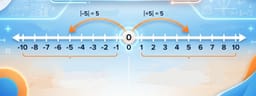
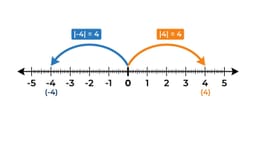
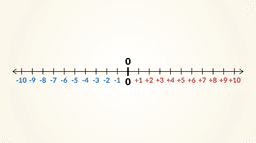
Integers (ℤ): By adding negative numbers and zero, we expand the number line to the left, allowing us to represent directions, depths, and balances: {..., -3, -2, -1, 0, 1, 2, 3, ...}.
Rational Numbers (ℚ): By filling in the spaces between integers with fractions and decimals, we ensure that every division of two integers (where the denominator is not zero) corresponds to a precise point on the number line.
7. Scientific Applications of Natural Numbers
Quantum Mechanics: Energy levels in atoms are quantized. Electrons can only occupy specific, discrete orbits represented by principal quantum numbers (n = 1, 2, 3, ...). There is no such thing as an energy level of 1.5.
Chemistry: Chemical formulas rely entirely on natural numbers. A water molecule (H₂O) contains exactly 2 hydrogen atoms and 1 oxygen atom. You cannot have a fraction of an atom in a stable chemical compound.
Computer Science: Computers operate on binary code (0s and 1s). Memory addresses, array indices, and loop iterations in programming are governed entirely by natural numbers.
Key Takeaways
Natural numbers are the ordinary counting numbers starting from 1 (or 0) and continuing infinitely.
They are denoted by the mathematical symbol ℕ.
They are closed under addition and multiplication, but not under subtraction or division.
The Peano Axioms provide the logical foundation for defining natural numbers mathematically.
Natural numbers serve as the launching pad for constructing integers, rational numbers, and real numbers to explain the continuous physical universe.